




Dogtra | July 20, 2026
Do Dogtra E-Fences Shock Dogs? What You Should Know
Yes, Dogtra e-fences use static stimulation. That is an honest answer, and it deserves a complete one. The word "shock" tends to carry a specific image, and what these systems actually do is quite different from that image. The correction is structured, adjustable, brief, and designed to guide behavior rather than punish it. Most dogs trained correctly on a Dogtra system rarely experience the correction at all, because the training process teaches them to respond before it activates.
Do Dogtra E-Fences Actually Shock Dogs?
Yes, Dogtra e-fences apply static electrical stimulation when a dog crosses a set boundary. The stimulation is not constant, not random, and not designed to cause pain. It is a controlled correction signal that activates only in response to a specific boundary event and stops automatically after a few seconds. The level of stimulation is adjustable to match the dog's size and temperament, which means a small sensitive dog and a large stubborn one are not receiving the same intensity. The system is built with that variability in mind.
How Dogtra E-Fences Work Step by Step
Dogtra e-fences follow a specific four-stage sequence every time a dog approaches or crosses the boundary. That sequence is what separates this system from the vague idea of a "shock collar" and makes the correction understandable and predictable.
Step 1: The Boundary Is Created
The safe zone is defined using GPS signals, radio frequency, or underground wire depending on the model. That boundary is stored and enforced by the collar. The dog roams freely anywhere inside it.
Step 2: Warning Comes First
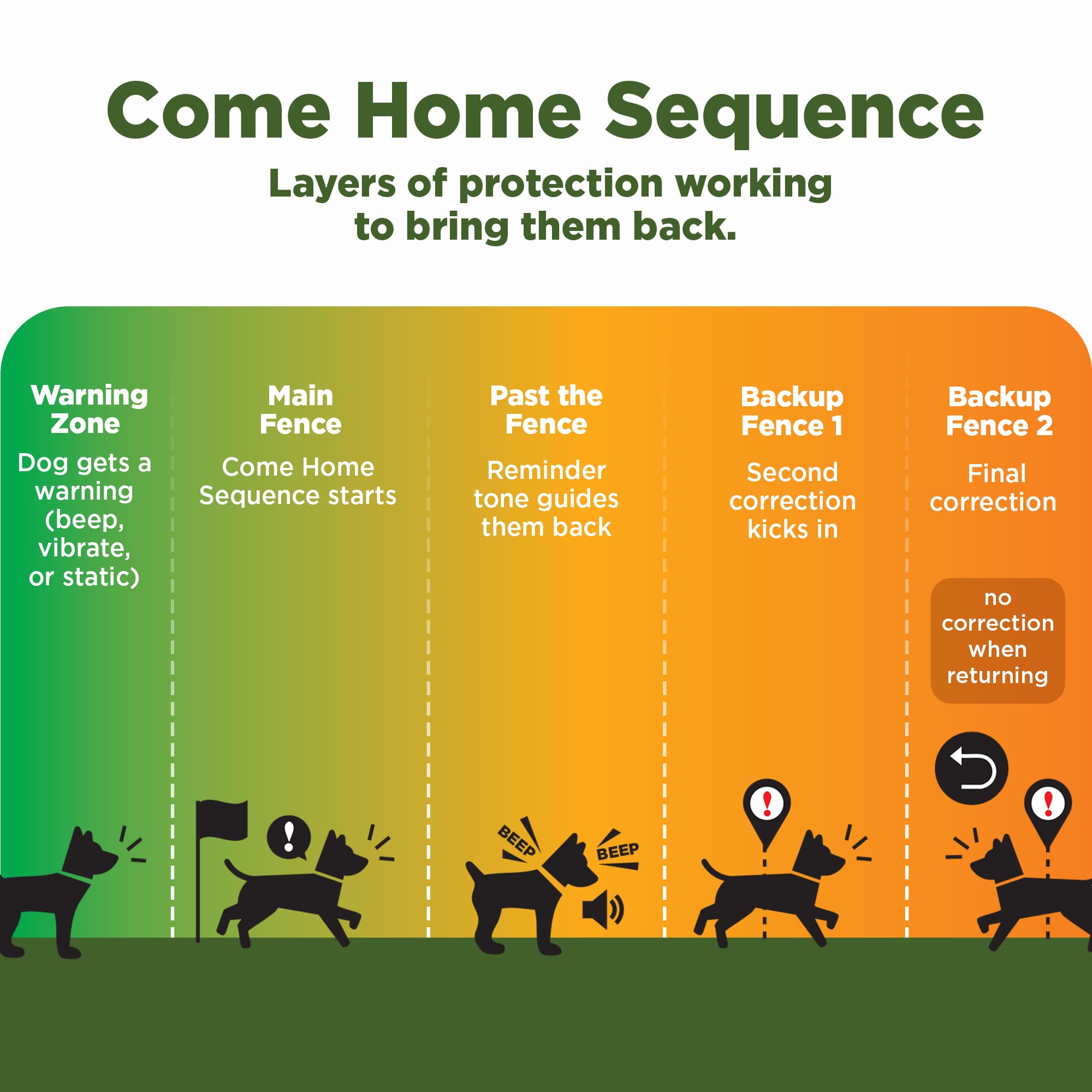
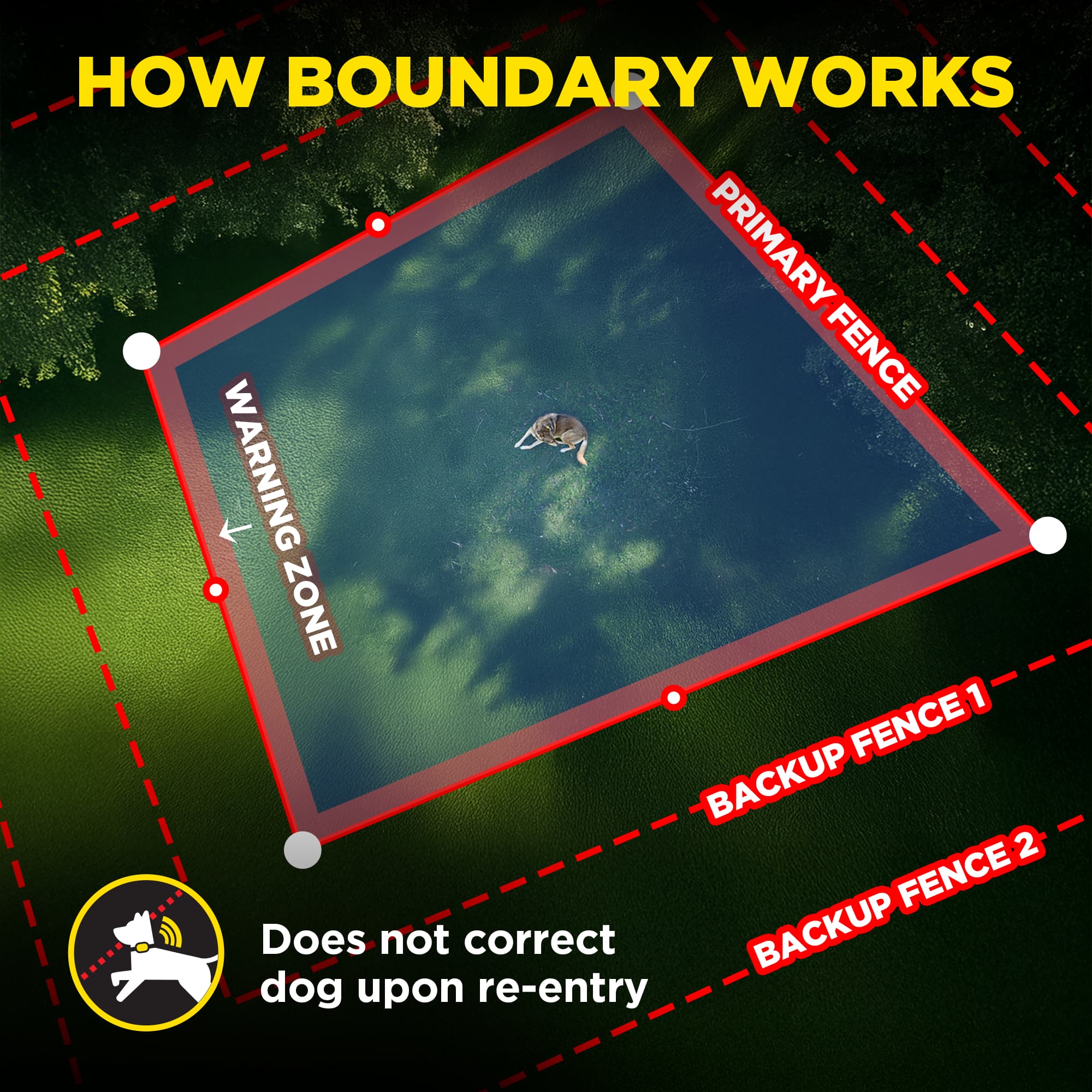
As the dog enters the warning zone within approximately 5 yards of the boundary, the collar emits a pager vibration for 5 seconds. No correction at this stage. The vibration is the signal that the dog is getting close, and a trained dog turns back here before anything else happens. Note that this warning zone applies to the GPS Fence. The Smart Fence uses a circular boundary and delivers a single correction without this layered buffer, which is why thorough tone-phase training is especially important on that model.
Step 3: Correction Only Activates if the Dog Continues
If the dog moves past the warning zone and crosses into the correction zone, the static stimulation activates. According to the Dogtra Pathfinder 2 manual, the correction lasts for approximately 5 seconds and then stops automatically. The cutoff is built into the system and does not require any input from the owner.
Step 4: No Correction When Returning
Once the dog is back inside the safe zone, no correction occurs. The system does not penalize the dog for coming home. Returning to the safe zone is always the right move, and the collar treats it that way.
What Does the Stimulation Feel Like for Dogs?
The stimulation produced by Dogtra e-fences is commonly described as a brief, mild static pulse when set to an appropriate level. At the correct setting for a given dog, it functions more like a tap than a jolt, something the dog notices and responds to rather than something that causes distress.
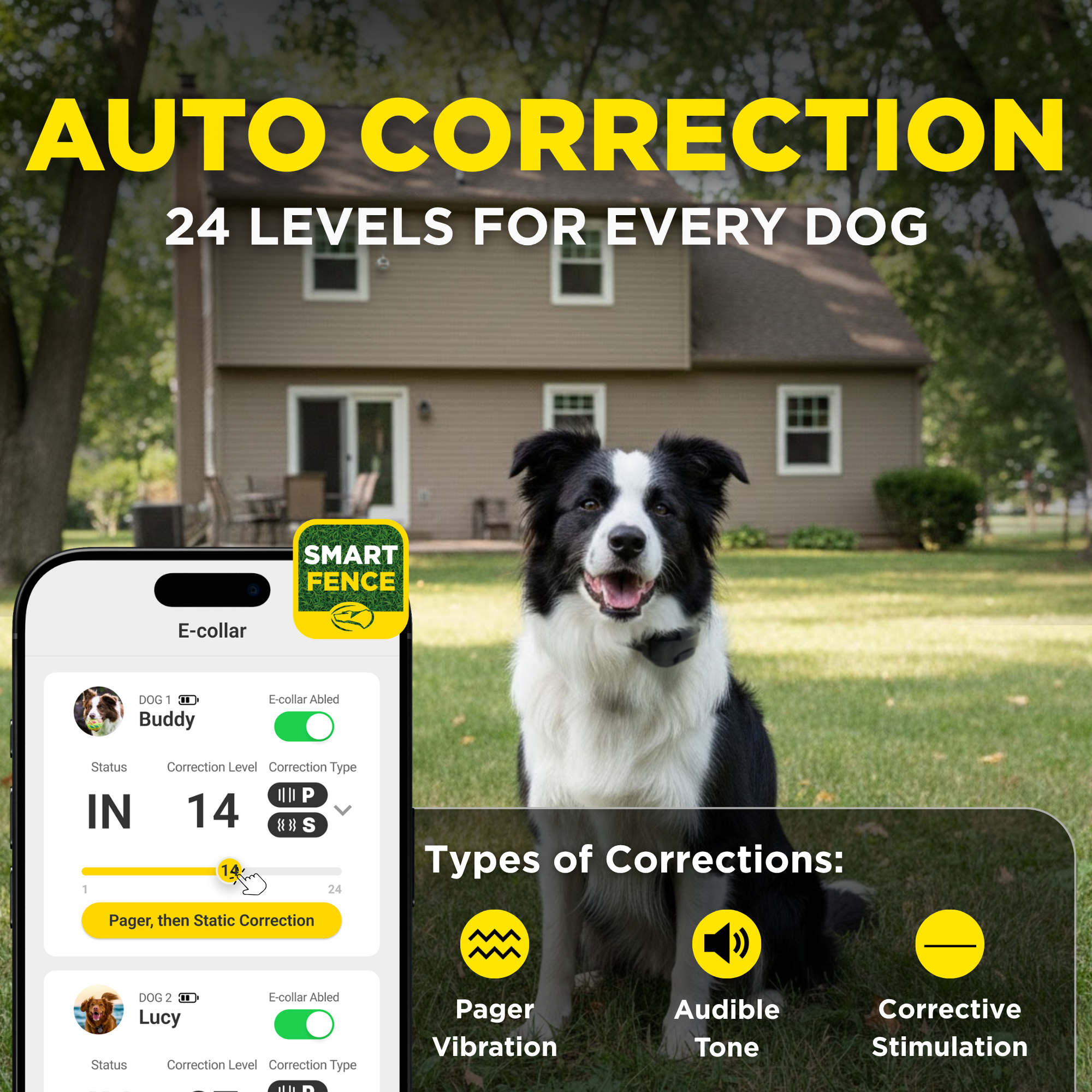
The intensity is not fixed. Dogtra models like the Smart Fence offer up to 24 adjustable levels, which gives owners precise control over what the dog actually experiences. Starting at the lowest level and adjusting upward only if needed is always the right approach. A correction that produces a clear response from the dog at a low level does not need to be higher.
Properly set, the stimulation is not painful. It is a communication tool, and the goal is to find the minimum level that gets the message across.
Why Training Matters More Than the Correction
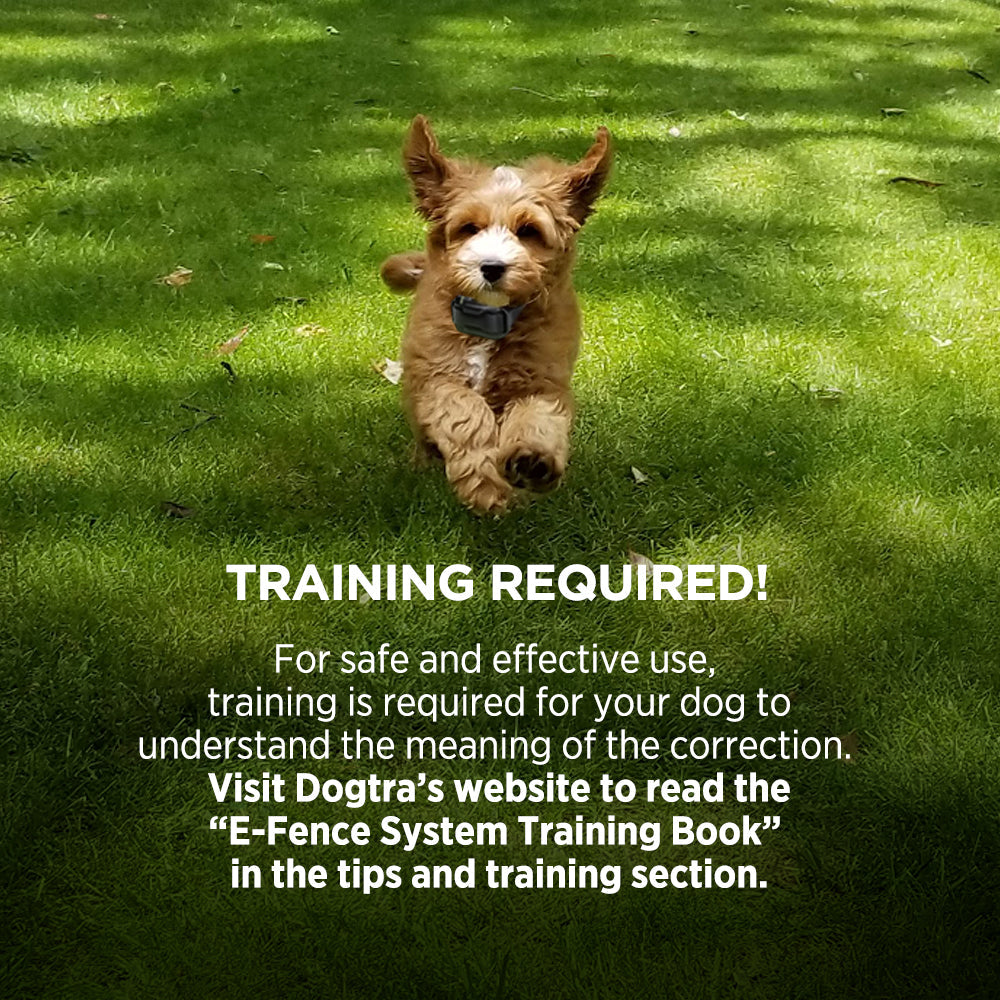
The correction is not what teaches the dog. Training is.
Dogs learn to use a virtual fence by being introduced to the boundary gradually, starting with tone or vibration only, and building the association between the warning signal and the need to turn back. A dog that has been through proper boundary training responds to the vibration in the warning zone and retreats before the correction zone is ever reached.
That is the actual goal of the system. The correction exists for moments when the warning is ignored, but a well-trained dog makes those moments rare. When owners skip or rush the training process, the correction ends up doing more of the work than it should, which is less effective and less comfortable for the dog.
Key Safety Features Built Into Dogtra E-Fences
Dogtra e-fences include several built-in mechanisms that limit the correction and protect the dog regardless of what happens in the field.
Adjustable Stimulation Levels
Correction intensity adjusts to match the individual dog. Multiple levels of stimulation mean owners are never forced to apply more than the minimum effective amount, and the system remains appropriate for a wide range of sizes and temperaments.
Time-Limited Correction
The stimulation stops automatically after approximately 5 seconds if the dog crosses the boundary. There is no scenario where the correction continues indefinitely. The cutoff is built into the system.
Warning Before Correction
The pager vibration in the warning zone always precedes the correction. Dogs are given a clear opportunity to self-correct before any stimulation activates, and a trained dog takes that opportunity consistently.
Waterproof and Durable Design
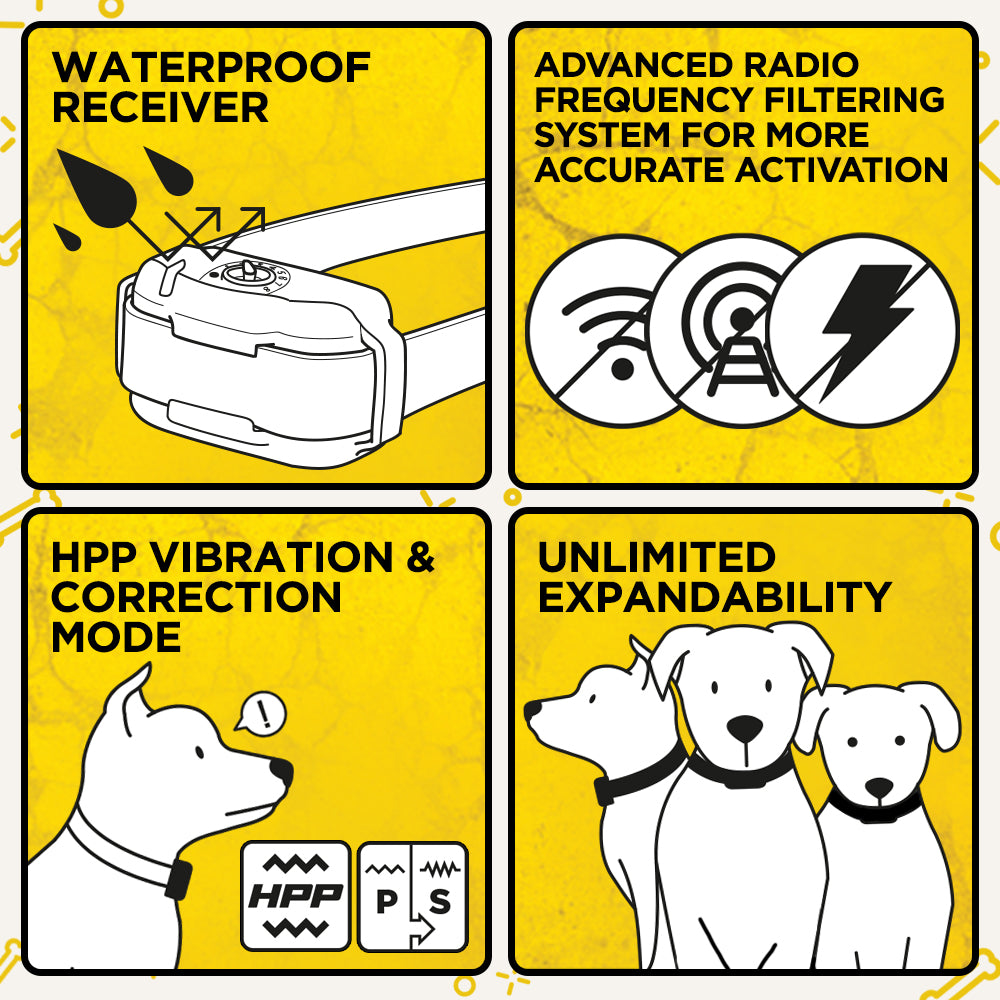
Dogtra e-fence collars are built for outdoor use and rated for weather resistance, including IPX9K waterproofing on select models. The system performs consistently regardless of conditions, which matters for reliability as much as it does for safety.
Are There Any Risks or Limitations?
Dogtra e-fences work well for most dogs in most situations, but there are specific circumstances where the system is less effective or less appropriate. Knowing those upfront leads to better decisions.
Highly Motivated Dogs May Push Through Correction
A dog in high prey drive or reacting to an intense trigger can push through the correction zone despite the stimulation. The correction is brief, and a dog that is fully fixated may not register it clearly in that moment. This is not a flaw in the system so much as a reminder that it works best as a training tool alongside proper behavioral work, not as a substitute for it.
Sensitive Dogs May Develop Boundary Anxiety
Some dogs, particularly anxious or noise-sensitive breeds, may develop avoidance behavior around the boundary area rather than simply respecting it. Signs include reluctance to enter the yard or hesitating near the flag line long after training is complete. If this happens, reducing the stimulation level and reinforcing positive experiences inside the safe zone usually resolves it.
Incorrect Use Creates Confusion
Setting the correction level too high, skipping the tone training phase, or using the system without any training foundation produces a dog that is confused rather than contained. The collar communicates clearly when the process is followed. When it is not, the correction arrives without enough context for the dog to understand what it means.
The System Has Practical Limitations
A dead collar battery stops the system from functioning entirely. The fence also does not prevent other animals or people from entering the safe zone from the outside. These are straightforward limitations worth knowing before relying on the system as the sole layer of safety for an unsupervised dog.
Who Should and Should Not Use an E-Fence?
Dogtra e-fences are a strong fit for many dogs but not every dog.
Good candidates:
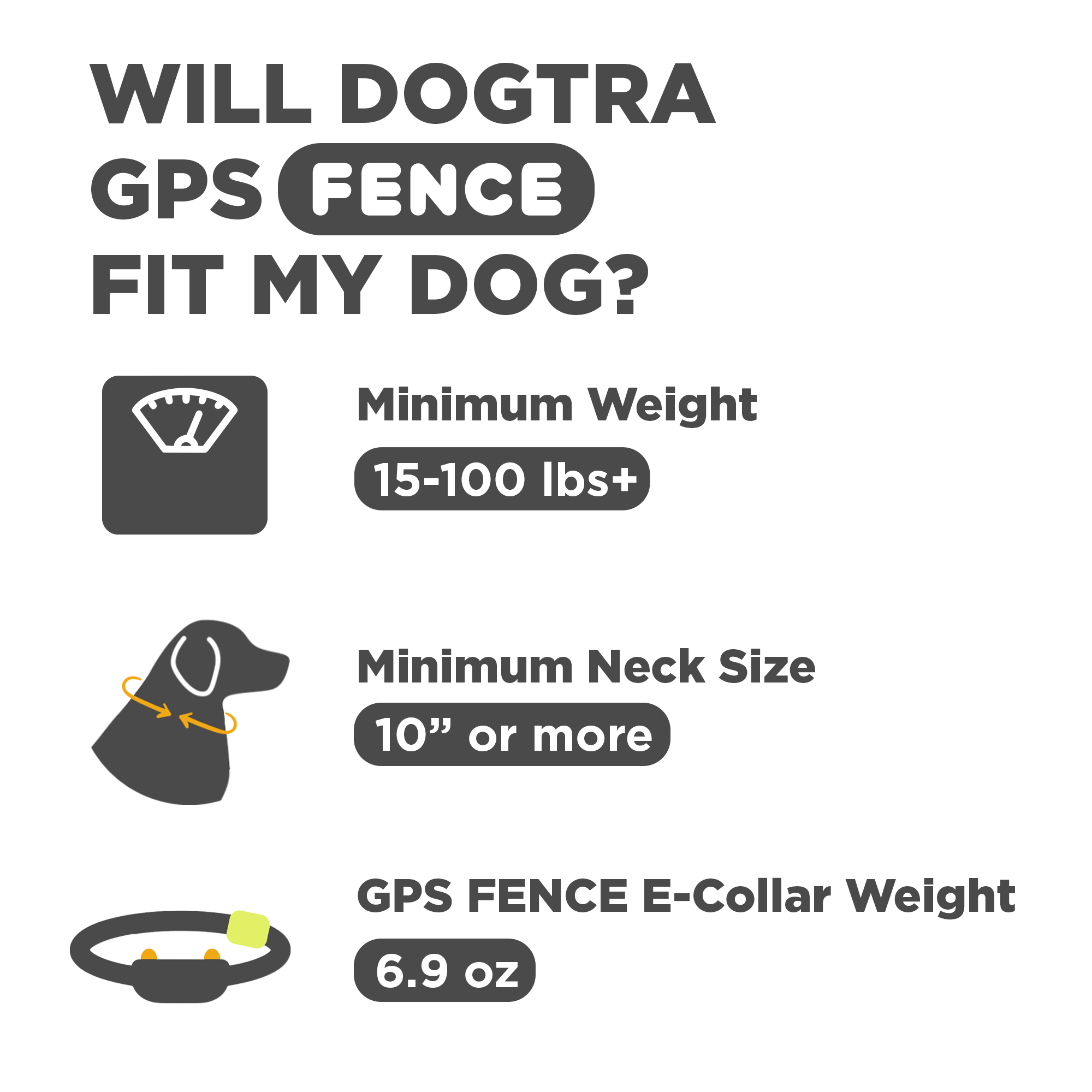
- Dogs over 6 months old and above the minimum weight requirement for the system
- Dogs with a moderate temperament that respond predictably to training
- Dogs that have shown they can learn through consistent positive reinforcement and correction-based feedback
Dogs that are generally not a good fit:
- Highly aggressive dogs, where stimulation can escalate reactivity rather than reduce it
- Very young puppies still in early developmental stages
- Dogs with significant anxiety or fear-based reactivity that has not been addressed with professional support
If a dog falls into any of the categories above, consulting a certified trainer before purchasing is the right move.
Common Misconceptions About E-Fence Stimulation
"It Shocks the Dog Constantly"
The stimulation only activates when the dog crosses the correction zone boundary. During normal activity inside the safe zone, the collar produces no correction at all. Most trained dogs experience the correction infrequently once boundary training is complete.
"It Hurts the Dog"
At the correct stimulation level for a given dog, the static pulse is not painful. It is designed to create a clear sensation the dog notices and responds to, not to cause distress. The adjustable levels exist precisely so owners can avoid applying more intensity than necessary.
"It Replaces Training"
It does not. The system is designed to work alongside training, not instead of it. A dog that has not been trained on the boundary will experience the correction without the context to understand what it means, which makes the system less effective and less comfortable for the dog.
Is a Dogtra E-Fence Humane?
Yes, when used correctly. The system includes adjustable stimulation levels, an automatic correction cutoff, a warning zone that precedes any correction, and no stimulation applied when the dog returns to the safe zone. Those are deliberate design choices that reflect a containment system built with the dog's experience in mind.
Humaneness in practice depends on three things: proper fit, appropriate stimulation level, and consistent training. A collar that fits too loosely delivers inconsistent contact. A stimulation level set too high creates discomfort rather than communication. Training that is skipped leaves the dog without the context to understand the correction. Get all three right, and the system functions as designed.
Should You Be Concerned About the Stimulation?
The concern is understandable, and it deserves a direct answer. Do Dogtra e-fences shock dogs? Yes, but only when a dog crosses a defined boundary, only for a few seconds, and only after a warning vibration has already given the dog the chance to turn back. The stimulation is adjustable, time-limited, and stops the moment it is no longer needed.
Dogs trained properly on a Dogtra e-fence learn to respond to the warning signal and avoid the correction zone. For those dogs, the stimulation becomes background infrastructure rather than a regular experience. The system works because the training works, and the training works because the system is predictable.
Explore Dogtra E-Fence Systems Built for Safe Containment
Dogtra offers three systems designed around the same core principles with different coverage options for different properties.
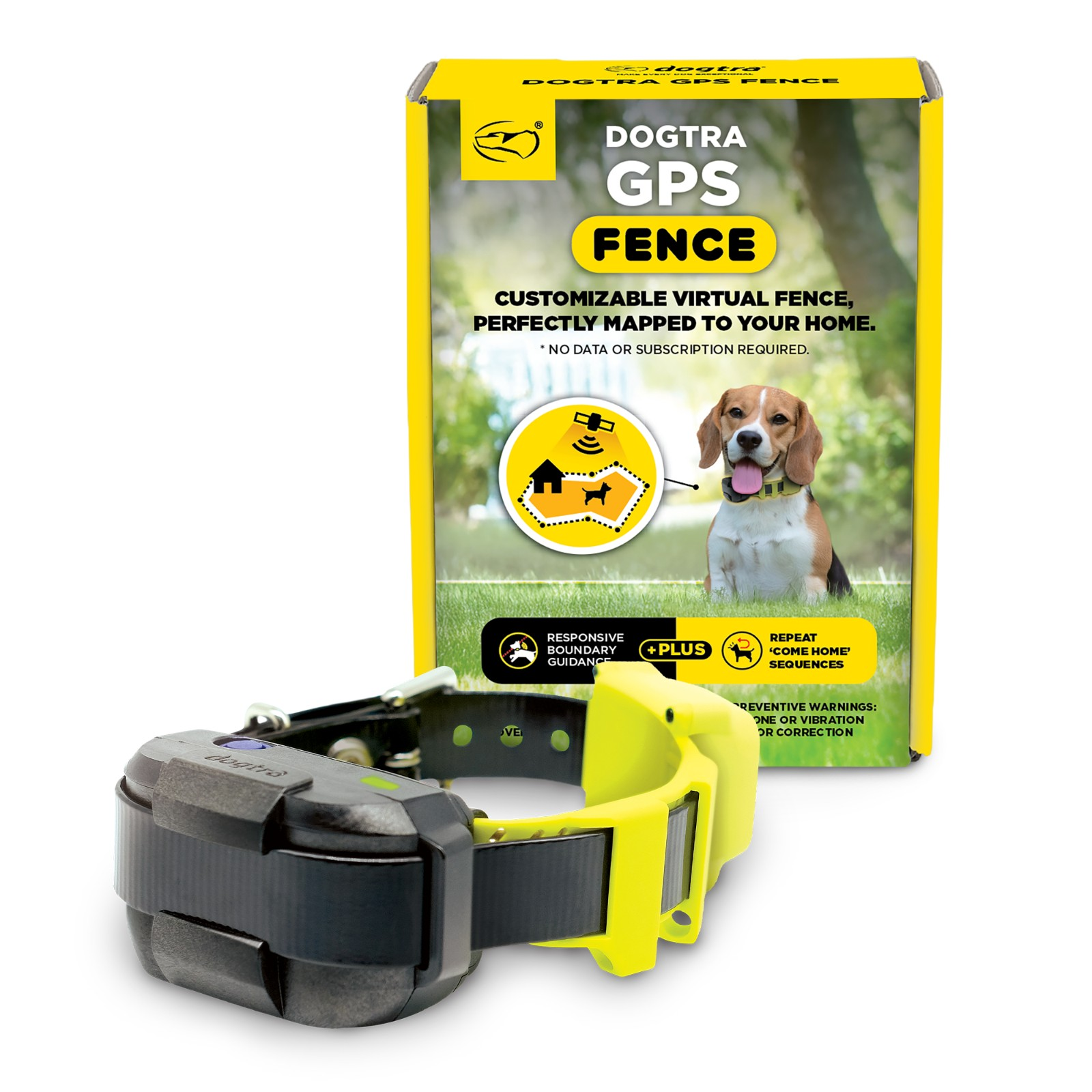
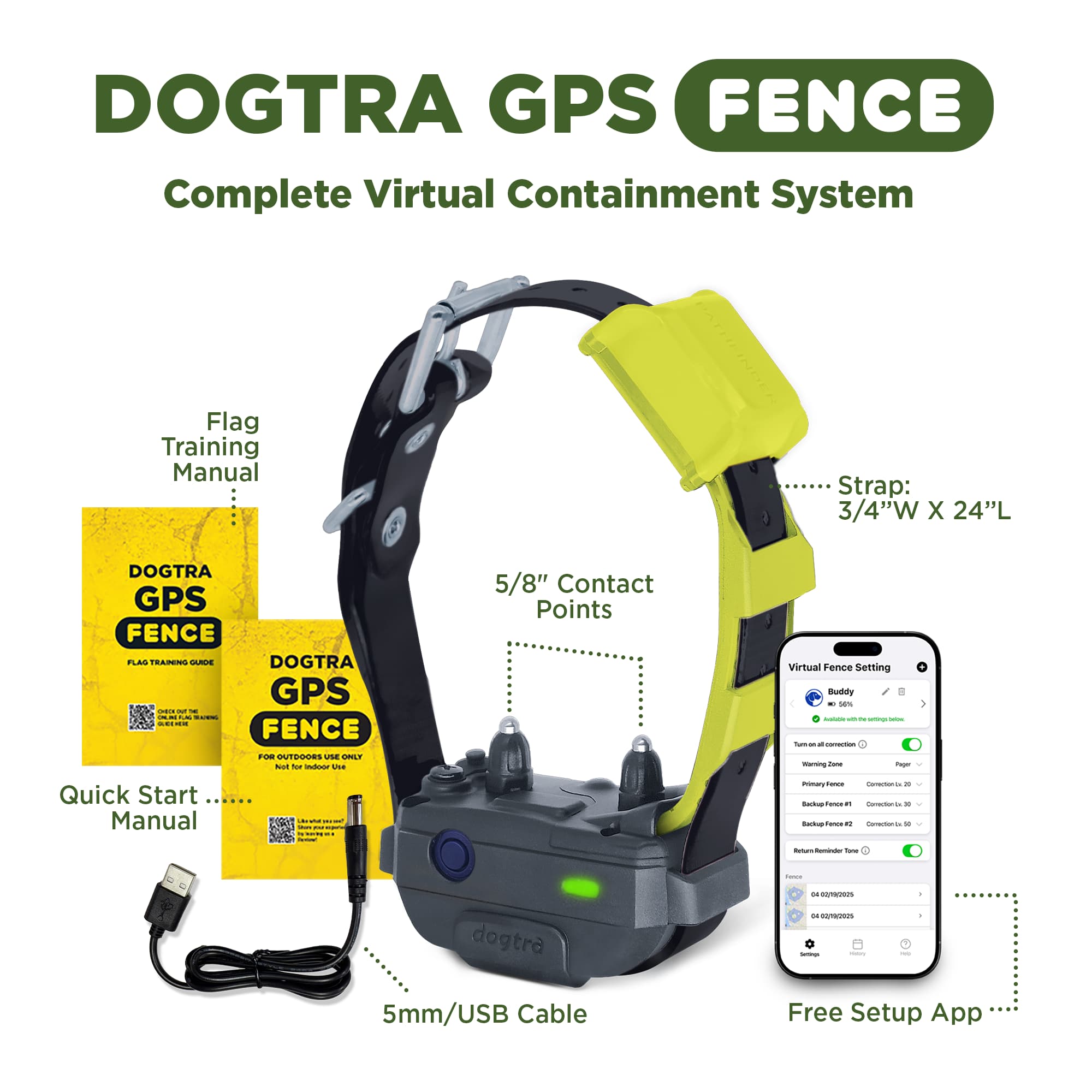
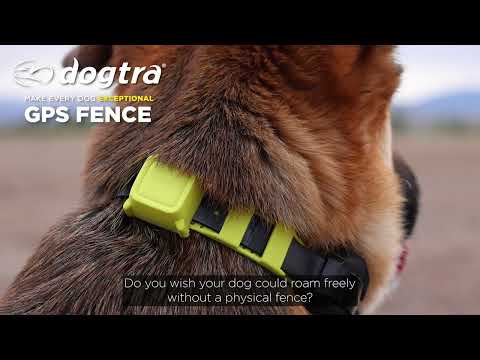
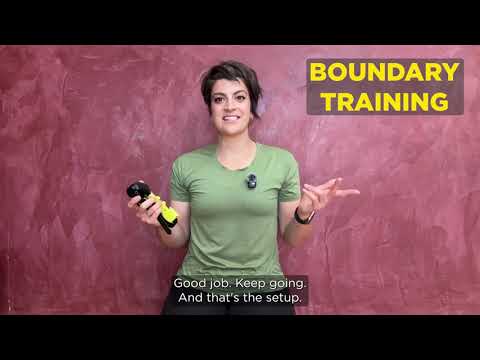
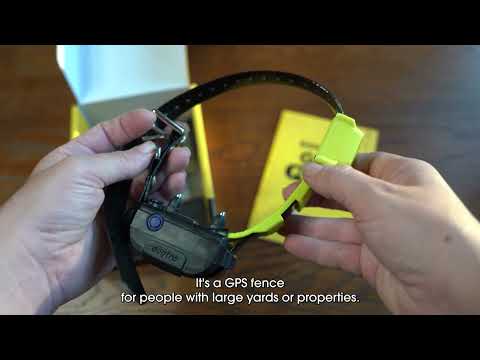
The Dogtra GPS Fence creates customizable boundaries using GPS satellite positioning, includes the full Come Home correction sequence with a 5-yard warning zone, and requries no installation. Built for properties of at least 3/4-acre because GPS signals have natural drift that makes smaller boundaries unreliable. No monthly subscription required.
The Dogtra Smart Fence uses radio frequency, includes a local alarm system within Bluetooth range, and is designed for smaller properties up to 3/4-acre with minimal setup. It delivers a single correction without a layered warning zone, so thorough tone-phase training is especially important. No subscription required.
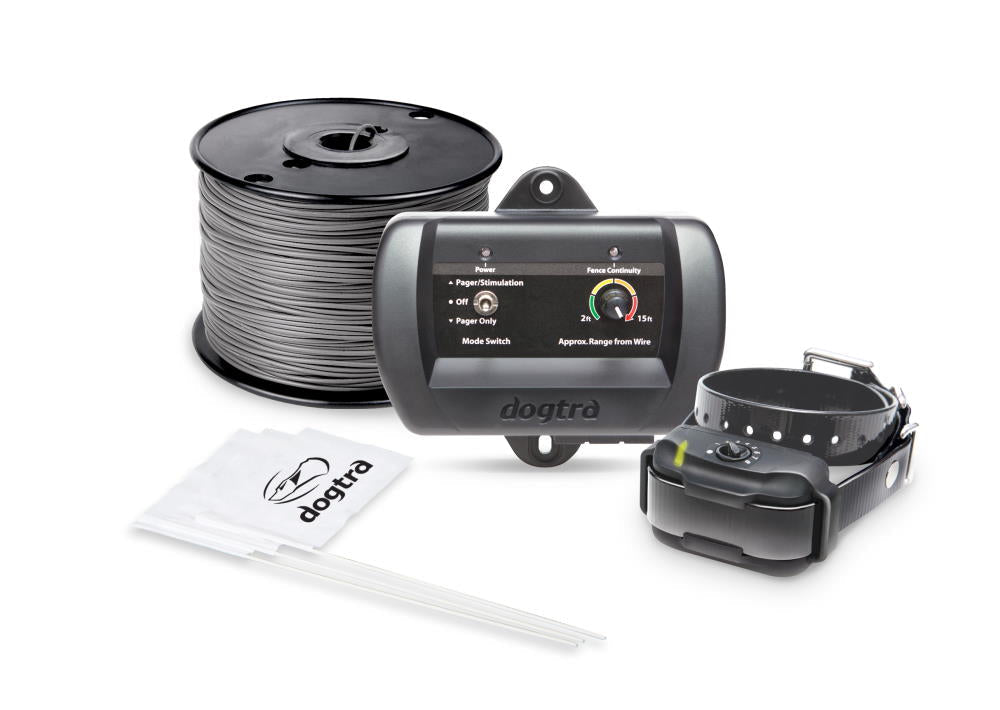
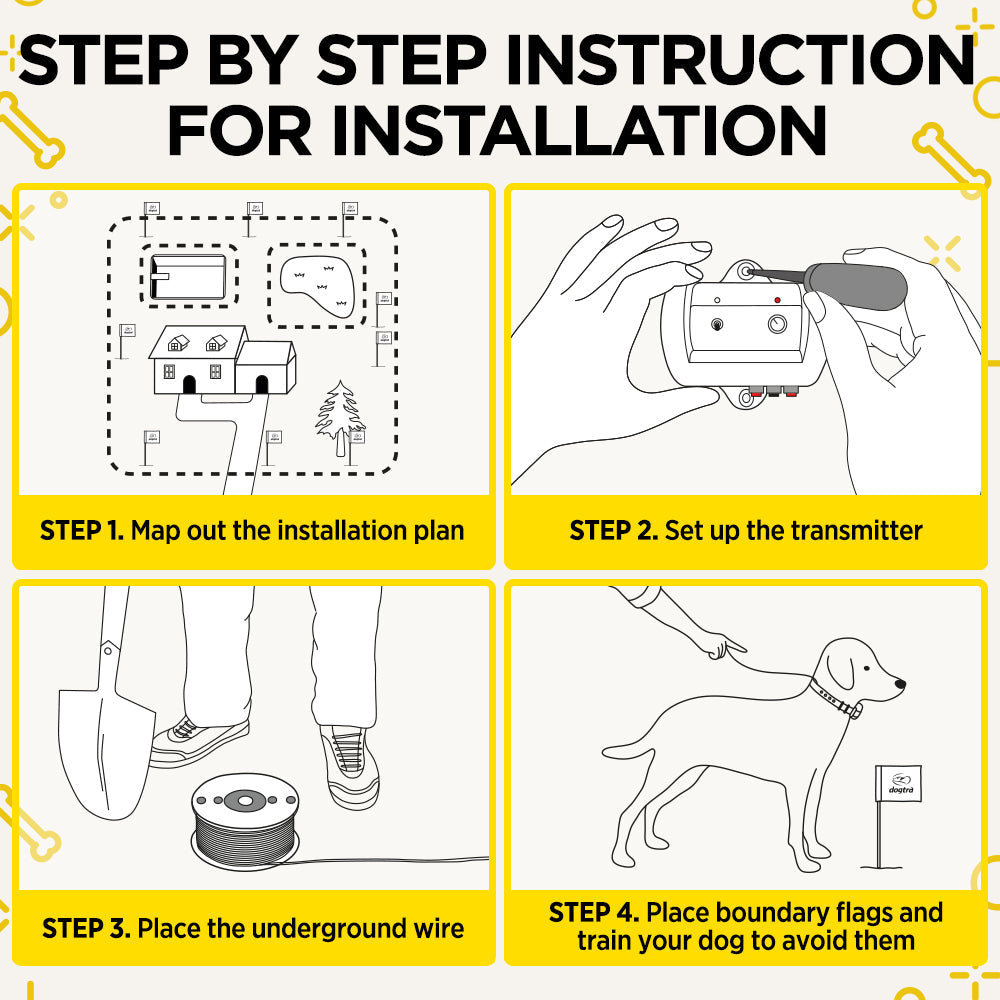
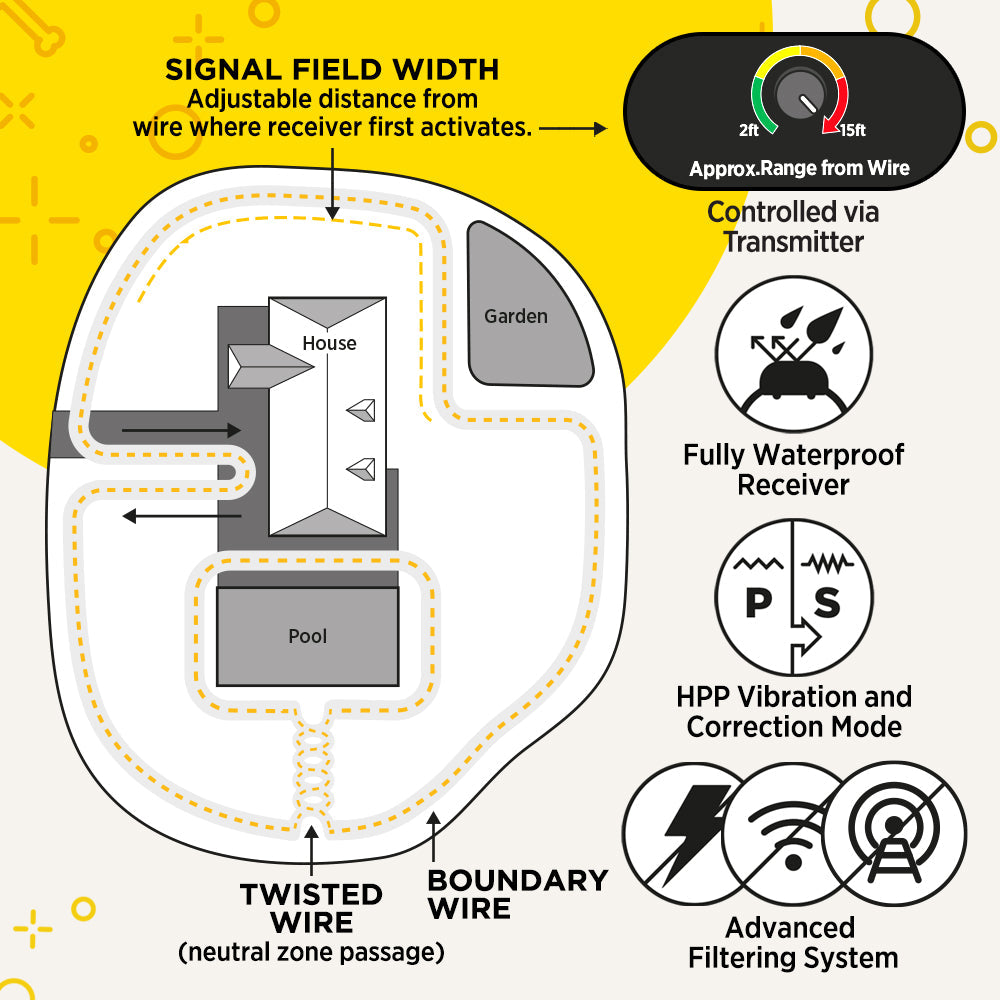
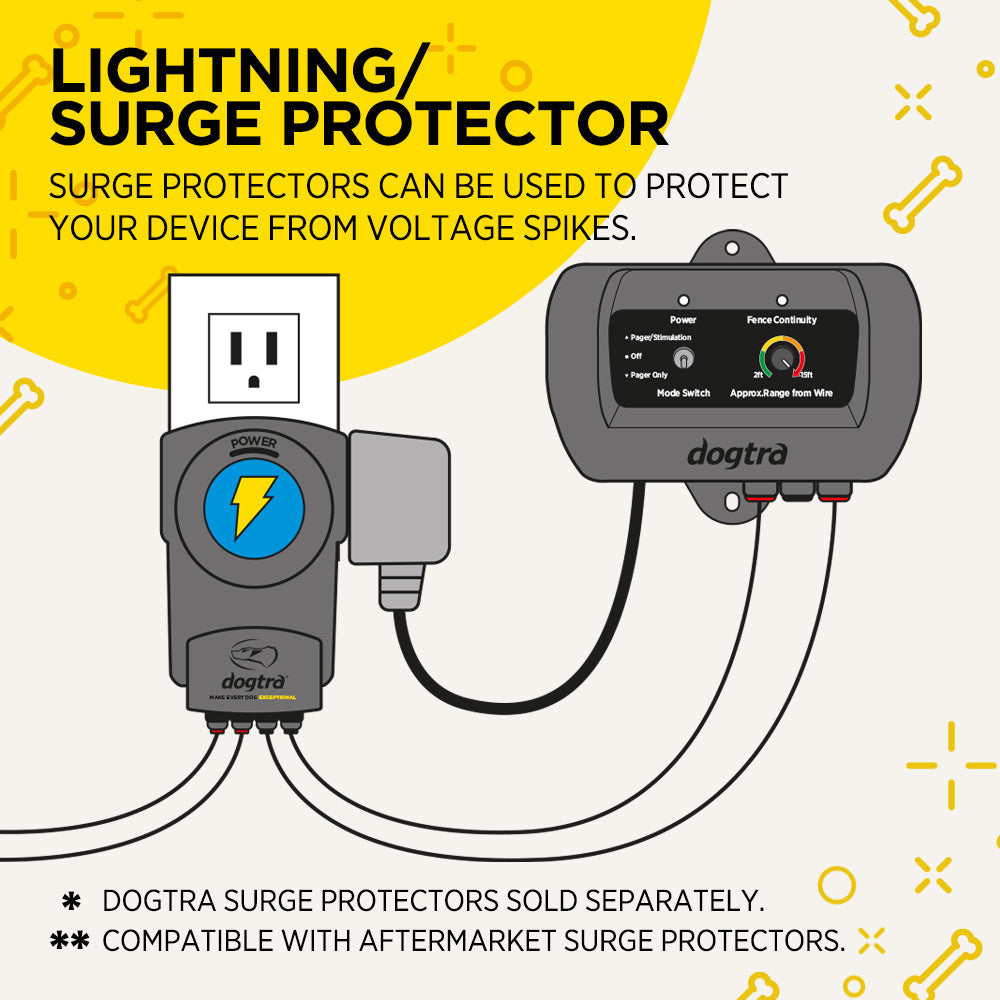
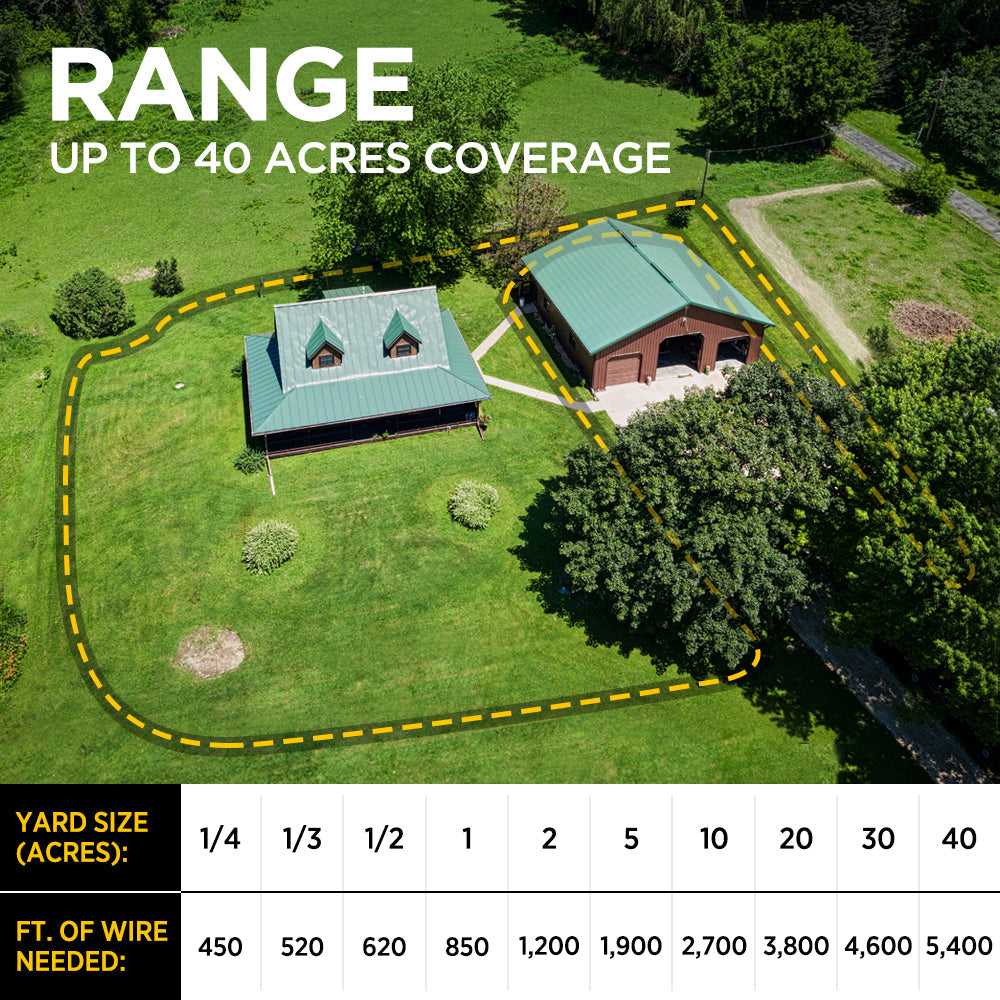
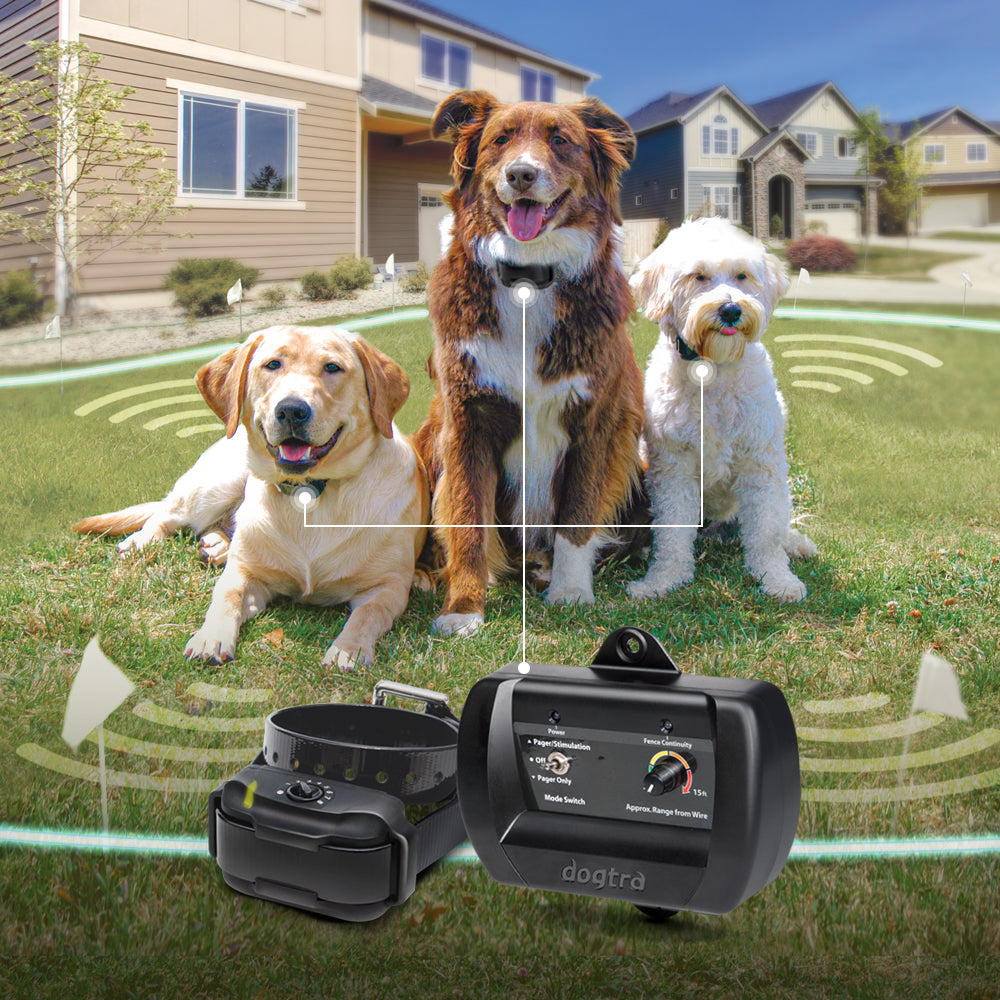
The EF3500 is a traditional in-ground wired system that supports unlimited dogs, covers up to 40 acres, and allows fully customizable boundary shapes.
Not sure which system fits your dog and property? Take the E-Collar Finder Quiz for a recommendation tailored to your situation, or browse all Dogtra e-fence systems to compare features side-by-side.
Featured Units






DOGTRA GPS FENCE










DOGTRA SMART FENCE

EF3500